Sunday, August 9, 2015

Lesson 7: Evaluation of Technology Learning


Jean C. Cotamora BSED General Science 4                
Author

CONTENT:
                It is not only important the learners metamorphosed into digital learners but also assessment. Once effective methods of assessment may no longer be effective now. Assessment has to evolve! Being digital learners means being evaluated the digital way to (in a sense not necessarily technology is involved, but the method is), Mass amateurization refers to the change in evaluation approach which implies mass reach of students outputs. It is not solely “paper-and-pencil test” but it’s more on the outcomes. The standard paper test proven inadequate in assessing the competencies of this generation. In this evolution, outcomes that are verbal-textual may be expressed in digital way or tangible outputs may be expressed though media projects (video, ppt, multimedia etc.).

EXPERIENCE:
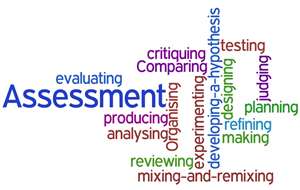
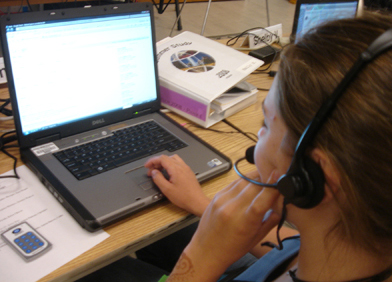
                Even though the standard way if assessing learning is still employed, I can say that my capabilities and abilities are also tested the digital way today. Documentations in our surroundings are being required to determine whether we really have developed values that we really need to develop. Our presentation skills are being tested through Microsoft PowerPoint presentations done in every reports we do. Our editing skills as well as our elaboration skills are being tested. It may not be usual but it’s no longer standard tests that are always employed in assessing our learning.
                Personally, I could say that I am being measured not just with how much I know but on how I apply it too and how I devise ways in dealing with challenges also.

REFLECTION:
                Indeed, assessment has to evolve! In this generation of digital education, learning is way too far to be measured using standard test. Although it may still be used in content-based approaches but learning the digital way takes more than a pen and a paper, it has to be actual! It is important that the six skills must be assessed appropriately because it all becomes void if assessed poorly. 


APPLICATION:
                As a future teacher I must make it sure that later, my assessment is in conformity with the digital trend and parallel with how taught it. As a future teacher, it should be my top priority to make it sure that my students’ learning are not in vain just because I assessed it poorly. As much as possible I must deviate from the standard test and method of teaching not unless the topic is so conceptual that I really have to go back to the basic.  It is important for me to note the improvement of my students so that is get to know where should stand and what I should do.

Lesson 6: Developing Basic Digital Skills


Jean C. Cotamora BSED General Science 4                           
Author


CONTENT:


In order for teachers to better adapt of the digital world, it must be made to know to them the basic skills to develop. Of course, primarily, it should be the 3 R’s: Reading, wRitng, and aRithmetic. There are six skills essential in equipping the students to become successful – fluency skills.
.


Solution Fluency – This refers to the capacity of students to devise creative solution to problems, apply and evaluate the effectiveness of the solution.


Student accessing to information


Information Fluency - This refers to the (a) ability to access information not only in the internet but on other resources too; (b) ability to retrieved information; and (c) ability to evaluate and reflect on the validity and accuracy of information and be able to rewrite the information in own words.


Collaboration Fluency – This refers to the teamwork be it virtual or actual, of the learners. There is partnership among learners in learning.


Media Fluency - This refers to the ability to evaluate information from chosen media and the ability to creatively make one that can also be published.


Students mimicking weather forecasting


        Creativity Fluency – This refers to the ability to creatively create stuffs.


Digital Ethics – As a digital citizen, the digital learner is guided by principles that would help him/her do right decisions. Before he/she clicks, he/she thinks.


Higher thinking skills are important to a digital learner. Such thinking helps him/her process information, create ideas, and solve real-world problems. To attain HTS, Blooms Taxonomy can be a guide, it has the following framework: (1) remembering – recall information; (2) understanding – explain ideas; (3) applying – use the information in several ways; (4) analyzing – distinguishing parts; (5) evaluating – justify stand; and (6) creating – making new product.

EXPERIENCE:
              
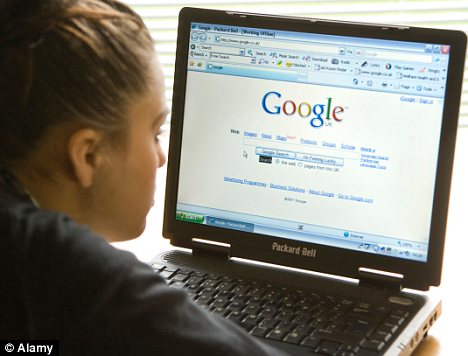
                I could still remember the first time I used google, and that was to search for the lochness monster. I learned to manipulate the computer on my own and that was yet I went to high school. Basically, I perceived internet as a source of information. Back then I wasn’t aware of all its other uses. But now, I get to acquire said above skills because of the experiences I was let to experience. I cannot say that I have acquired all the basic skills but I can say that I have something of them. I am still in the process of developing all of them.


Back then, the focused of my computer class was just to develop basic computer skills. We were not molded into becoming fluent in making solutions using technology or evaluate information from the internet. It’s totally different in college. At this point in time, I constantly bombarded activities and requirements that develop the skills. I think, at some point later, I’ll get to have all these skills.

REFLECTION:             
Good for me because even before I went to high school, I already have the prior knowledge on how to use the computer but my classmate who hadn’t had their prior experiences on how to use computers really had hard times in using it. I cannot say that my teacher’s approach in teaching the subject was wrong but with my knowledge now, I could say that it would have been better if there was a “more basic” approach in teaching. There should have been repetitive activities and drills to so that we could have learned better, my classmates would learned the easier way. There should have also been emphasis on at least developing our skills to develop media skill so that we could have been, I could have been a better evaluator of information.

                It is important for the digital teacher to be able to develop the said above skills so that in turn, the students get to develop them too. It is important for the teacher to develop the higher thinking skills of his/her students because without this, the above said skills cannot be manifested.


APPLICATION:
               
                    As a future teacher, I must seriously aim for the development of the higher level of thinking of my students so that they will get to develop the six essentials skills to be better digital learners.  I will make use of activities that will make them solution makers, evaluator and retriever of information, collaborative, skeptic (in a good way) in choosing media, and be model netizens. I must see to it that all these skills are in them and they get to be in conformity with the trend of the world.